Table of contents
Miss a turn in an unfamiliar city and you may accidentally gain what guidebooks can’t quite promise: a story. In an era of hyper-optimized travel, with routes pinned and restaurants pre-booked, researchers still find that detours, uncertainty and small frictions can heighten attention, deepen memory and, in some cases, deliver the places travelers later rank as “unforgettable”. From the psychology of novelty to the way cities reward slow wandering, getting lost remains one of travel’s quiet engines, and it keeps shaping where people go, what they notice and what they remember.
Getting lost sharpens attention, then memory
Forget the myth of the “perfect itinerary”. The brain often records more when it has to work. Cognitive research has long linked novelty and mild uncertainty to stronger encoding of experiences, because unfamiliar stimuli demand attention and attention is the gateway to memory. In practice, a wrong bus stop or an unexpected street can force travelers to scan signs, compare landmarks and make quick decisions, and that heightened focus can make the moment stick. In a widely cited framework, psychologists describe the “novelty effect”: new environments trigger exploratory behavior and increase the salience of sensory detail, from the smell of a bakery to the rhythm of a neighborhood market, and those details are precisely what later animates a story.
The same logic is visible in spatial navigation studies. In experiments where people learn routes in a new environment, memory improves when participants actively navigate rather than passively follow turn-by-turn instructions, because active navigation recruits the hippocampus, a brain region central to forming episodic memories and mental maps. It is no accident that many travelers can vividly recall a confusing alleyway or a sudden viewpoint discovered while improvising, while barely remembering the “must-see” monument visited on autopilot. By removing some predictability, getting lost can convert a city from a checklist into a lived space, and lived spaces are easier to remember than a sequence of attractions.
There is also an emotional component. Mild stress, the kind that comes from being unsure where you are but not truly unsafe, can intensify recall; it raises arousal, and arousal can strengthen consolidation. The key is the dose. Too much fear narrows attention and can sour a trip, yet moderate uncertainty can feel like an adventure and turn ordinary scenes into personal landmarks. That is why so many travel memories begin with a mistake and end with a discovery, because the detour supplies tension, and tension makes the resolution satisfying.
Serendipity thrives beyond the algorithm
Here is the paradox of modern travel: the more planning tools improve, the more people complain that destinations feel “the same”. Platforms rank the same handful of sights, map apps funnel crowds through identical corridors, and even “hidden gems” go viral, then stop being hidden. Getting lost is one of the simplest ways to break that loop, because it pushes travelers out of recommendation systems and into the city’s long tail, the side streets, the small museums with irregular hours, the parks that never trend, the cafés known to residents but invisible to search results.
Serendipity is not magic; it has mechanics. Urbanists note that cities generate chance encounters where street networks are porous, where mixed-use blocks keep foot traffic constant and where public spaces invite lingering. Wander off the main axis and you often move from consumption to observation, from buying a ticket to watching how a place breathes. That is also where conversations happen: asking for directions, clarifying a bus number, receiving a local suggestion that no app would surface. Those micro-interactions are easy to overlook, yet surveys on travel satisfaction repeatedly find that social contact, even brief, correlates with higher perceived authenticity and stronger attachment to a destination.
Data from tourism bodies underline how concentrated travel can be. In many European capitals, a small number of landmarks absorb a disproportionate share of visits, leaving nearby districts comparatively empty despite offering comparable architecture, food scenes or cultural venues. Detours redistribute attention. They do not merely “add” an extra stop; they can change the frame of a trip, because the traveler begins to look for texture rather than icons. The memorable destination, in other words, is often not a single place but a sequence of small surprises, stitched together by walking, curiosity and the willingness to be slightly off-route.
Cities reveal themselves at walking speed
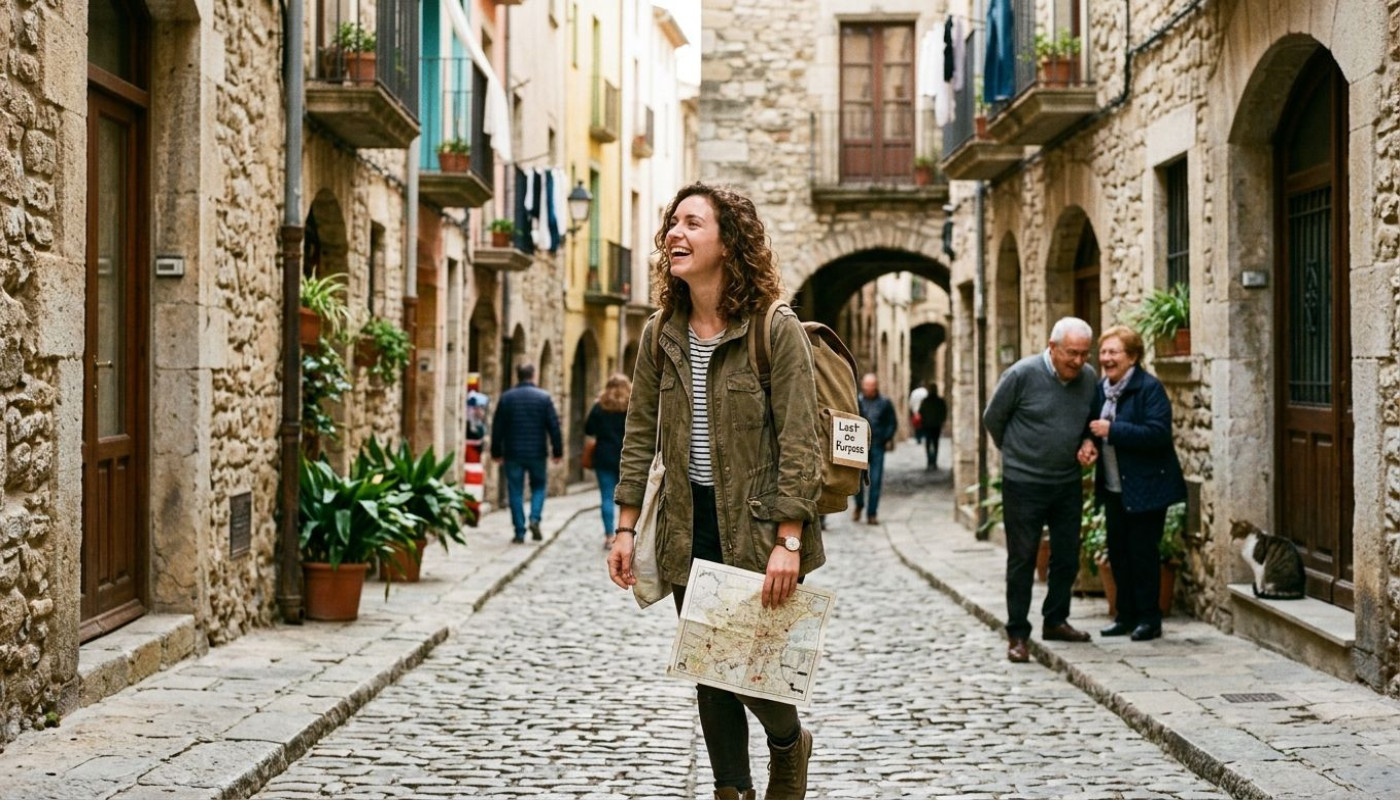
Speed hides things. Walk, and the city starts speaking. Transport researchers have shown that distance is experienced differently on foot than by car or metro: the pedestrian’s world is continuous, full of transitions, while motorized travel jumps between nodes. That continuity matters for memory and for meaning, because it helps travelers build a narrative of place, not just a list of stops. When you are walking and you take the wrong street, you do not simply “lose time”; you enter a different micro-geography, with different storefronts, different sounds, different faces, and sometimes a better view of how locals actually live.
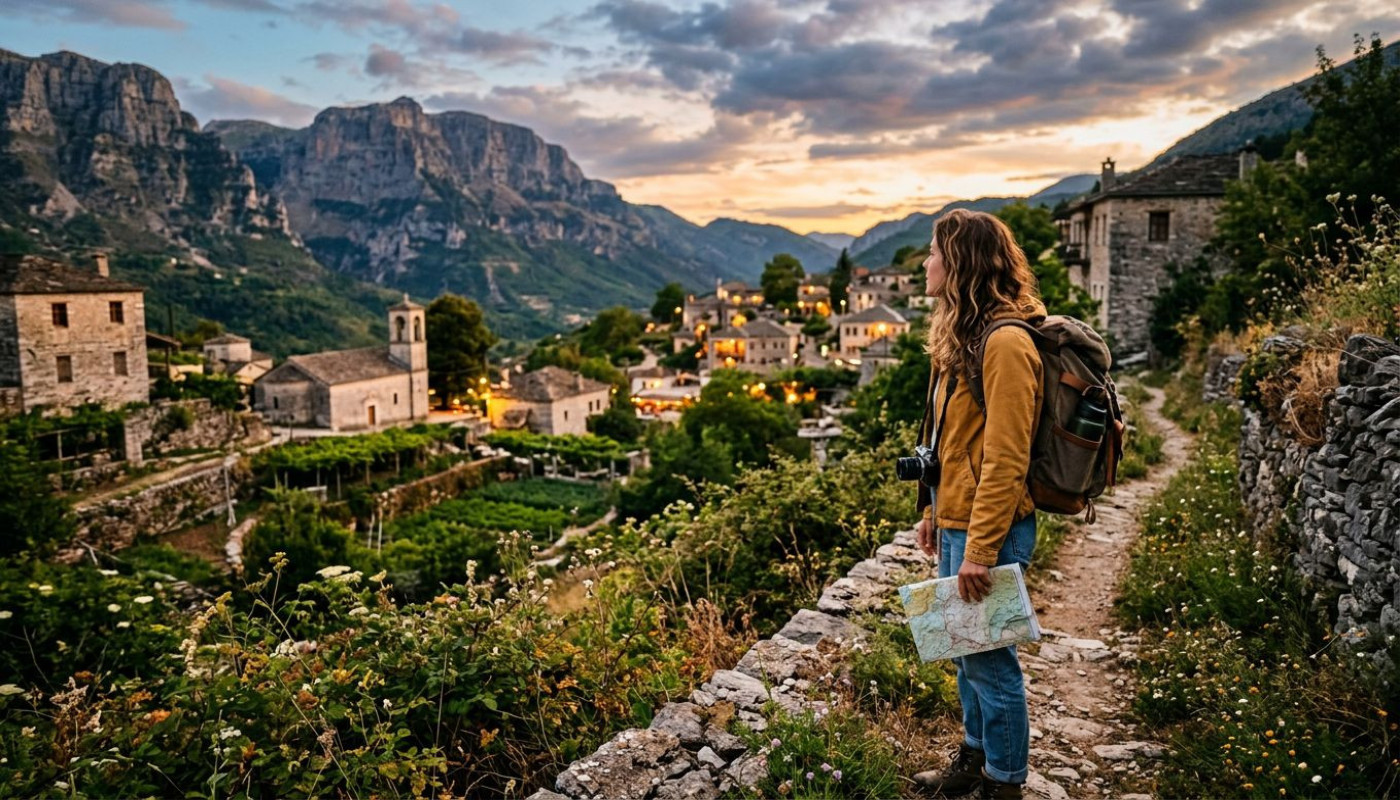
Several studies on wayfinding suggest that pedestrians rely on landmarks and street patterns, not only on explicit signage, and the act of reconstructing a route strengthens cognitive mapping. That is why certain neighborhoods, those with distinct architectural cues or memorable public spaces, often become the unexpected highlight of a trip. It is also why planners and tourism experts increasingly talk about “walkable tourism”: improving pavements, crossings and information so visitors can explore safely without being confined to a corridor. The goal is not to force travelers into a single scenic route, but to give them the confidence to roam, because confidence is what turns “lost” into “exploring”.
Of course, walking does not mean wandering blindly. The best detours happen when the traveler mixes a loose plan with real-time observation, checking the broader direction but allowing the details to decide the path. That balance reduces risk and increases discovery. For visitors who want a structured way to explore while keeping room for the unexpected, locally designed experiences can provide context without smothering spontaneity, and resources such as https://www.bucharest-escape.com/ can help travelers understand a city’s layers, from history to neighborhoods, while still leaving space for the kind of turns that create lasting stories.
Lost does not mean unsafe: practical rules
A detour should feel like freedom, not like danger. The line is clearer than people think, and it is mostly about preparation and situational awareness. Start with the basics: carry a charged phone, know how to get back to a central point, and save offline maps for the area you are exploring. In many cities, roaming charges or weak reception can turn a minor navigation error into a stressful episode, and stress is the enemy of curiosity. Tell someone where you are going if you plan to wander far, especially at night, and keep your essentials separated, because losing a wallet and losing your way are a bad combination.
Time matters as much as place. Getting lost in daylight is different from getting lost after the last metro. Many tourism police services and consular advisories emphasize predictable risk factors: poorly lit streets, intoxication, isolated areas and visible valuables. The practical response is simple and does not ruin the romance of travel: set a “turn back” time, avoid empty shortcuts, and if a street feels wrong, trust that signal and change course. Travelers can also use public, well-lit landmarks as anchors, a busy transit stop, a major square, a staffed hotel, because those anchors make exploration safer and reduce the temptation to stare at a phone, which can broadcast vulnerability.
Money is another quiet variable. Some of the most memorable detours are inexpensive, a park discovered by accident, a neighborhood bakery, a small gallery, yet they are easier to enjoy when the budget is not strained by last-minute transport or overpriced tourist traps. A small contingency fund, even 5% to 10% of the trip cost, buys flexibility: an extra taxi when it rains, a paid guided visit when context matters, a spontaneous concert ticket. Getting lost works best when it is a choice, not a necessity, and choice is what transforms a wrong turn into a destination worth remembering.
Plan the detour, not the minute
To keep spontaneity without losing control, reserve key nights early, set a daily budget and leave open blocks in the schedule, because the best discoveries rarely fit between two timed entries. Many cities also offer visitor passes, free museum days or discounted transit cards; checking them in advance can reduce costs and make unplanned exploration easier, and that is often where the most memorable destinations begin.
On the same subject